Let the relationship lead

Regina Morris • January 5, 2026

Some days it feels like parenting is just putting out fires; homework, messes, sibling fights, bedtime battles. It's easy to slip into "manage and control" mode.
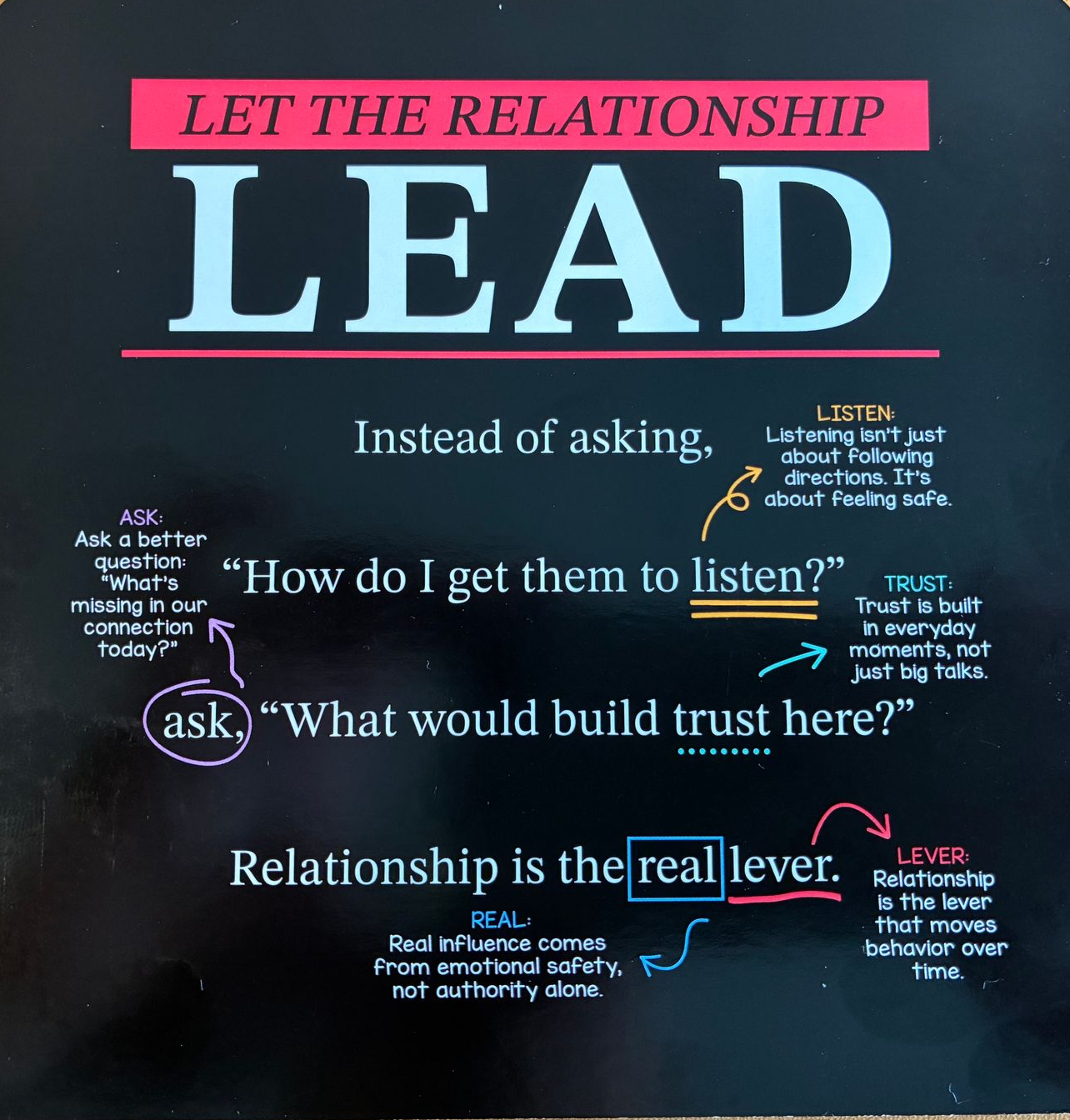
What this means. "Let the relationship lead" means your connection with your child comes before fixing behavior or winning arguments. When you're unsure what to do, you ask: "What choice best protects our relationship right now?"
Try this- 
  • Before responding, silently ask: "What does our relationship need in this moment?"
  • Choose one moment today to listen more than lecture.
  • When you're tempted to punish, try connecting first with a calm tone and gentle touch.
Remember:  When the relationship leads, cooperation usually follows.

If you would like support applying this in your home, you can book a free 20-30 minute connection call with me here under my contact section; Let's Talk.


Connected Parenting Mindset Cards purchased from: selpowerpack.com

By Regina Morris January 11, 2026
What this looks like in real homes 1) The “one more minute” spiral You say, “Time to turn the iPad off.” Your kid says, “NO!” and suddenly you’re negotiating, threatening, counting, or repeating yourself. Choose play not power looks like: You keep the boundary and shift the energy: “Okay, we’re going into Secret Agent Shutdown Mode. Your mission: press the off button with your pinky finger in 3…2…1.” Same limit. Less friction. 2) The getting-out-the-door standoff You say, “Shoes on.” Your kid wanders, melts, argues, or collapses like their legs stopped working. Choose play not power looks like: You become the “Shoe Announcer” for 20 seconds: “Ladies and gentlemen…we have a left shoe approaching the runway… will it land safely?!” Your tone does the heavy lifting, not your volume. 3) The bedtime power struggle You say, “Brush teeth.” Your kid says, “I already did!” (They did not.) Now you’re both locked in. Choose play not power looks like: You turn it into a tiny game: “Quick—show me your best ‘lion teeth’ and I’ll see if they’re ready for the Toothbrush Spa.” You’re not bribing. You’re connecting first so they can cooperate. Real talk: This won’t work every time. But it works often enough to change the whole tone of your home—because play is a fast track to felt safety, and felt safety is what makes cooperation possible. 3 playful ideas you can try today (even if you’re not naturally silly) 1) The 30-Second Challenge Pick one annoying daily task and turn it into a tiny timed mission: “Can you get your shoes on before this timer ends?” “Can you beat me to the sink?” “Can we do ‘toys away’ in one song?” Why it works: It shifts the brain from “I’m being controlled” to “I’m in a game.” Tip for non-silly parents: Keep it neutral and short—no big performance needed. 2) The “Two Choices + One Twist” Offer two acceptable options, then add a playful “twist” option that still meets the boundary: “Do you want to hop to the bathroom like a bunny or walk like a robot?” “Teeth first, then story… do you want ‘calm voice’ or ‘mystery narrator voice’?” “Shoes on the stairs or shoes by the door—you choose the location.” Why it works: It gives your child control inside your boundary. Tip: If they reject both choices, calmly repeat: “You can choose, or I’ll choose.” 3) Narrate Like a Sports Commentator Turn your voice into a calm, playful narrator for 10–20 seconds: “We have a child approaching the jacket… will they choose the sleeves?!” “The toothbrush is entering the mouth… folks, this is a big moment.” “Oh! The backpack has been spotted!” Why it works: It lowers threat and increases connection without you “giving in.” Tip for non-silly parents: You can do this in a low-key tone—think “documentary,” not clown. Choosing play over power doesn’t mean you’re becoming the “fun parent” 24/7 or letting go of expectations. It means you’re using connection as your shortcut to cooperation—especially in the moments that usually spiral. When you bring even a tiny dose of play, your child’s nervous system softens, the fight drops, and the boundary can actually land. Start small: pick one daily hot spot (shoes, screens, teeth, bedtime) and try one playful shift for 20–30 seconds. If it works, great—repeat it. If it doesn’t, you didn’t fail; you gathered information. The goal isn’t perfect parenting. The goal is a home where boundaries feel steadier, and relationships feel safer. Need a calmer way through power struggles? Let’s build your go-to play tools together. Visit the contact page and schedule a free consultation call. Connected Parenting Mindset Cards purchased from SELpower.com
By Kiva Schuler September 28, 2020
If you feel like simply getting out the door on time (tie your shoes… where’s your coat… do you have your lunch??) is a battle, the reality is that you are locked in a power struggle with your child.