One Thing I Would NEVER Do Again As a Parent

Kiva Schuler • September 28, 2020

If you feel like simply getting out the door on time (tie your shoes… where’s your coat… do you have your lunch??) is a battle, the reality is that you are locked in a power struggle with your child.

Someone will “win” and someone will “lose.” 


And while this can be hard to recognize in the moment, power struggles are counter productive when it comes to cultivating a loving, healthy relationship with your child. 


Power over dynamics are ubiquitous in our culture. However, when we tap into a larger truth we can see that everyone is divinely worthy of their own thoughts, emotions and experiences. 


Yep! Even your kids. When we succumb to the candy of a power struggle, we are diminishing our child’s (the one we’d gladly dive in front of a bus for) self-worth, inner authority and ultimately, causing separation in the relationship through an erosion of trust. 


While the stakes of this seem small when children are young, this can lead to really negative repercussions when these little cuties turn into big cuties. Teenagers who aren’t in communication with their parents about big challenges make poor decisions. 


However, when trust and communication strategies are established early, there is an unshakable foundation that you child knows they can rely upon. They will come to you. Even when things are hard. 


This is not a case for permissive parenting. 


Clearly, we are charged with teaching our children to behave in acceptable ways, and to embody the values that we hold dear. I’ve learned that this is far more effectively done through conscious communication and emotional demonstration than the old “power over” ways that most of us were parented. 


When my kids were little, I was a HUGE fan of the show “Supernanny.” She relied on a punishment and apology frame. Time outs were the relied upon method of bending a 3-year old to your will as a parent. (I personally loved the show because it made me feel like other people were way worse at this parenting thing than I was, and I wasn’t particularly confident in my skills at the time.) 


I implemented her methods with gusto. 


You will put on your shoes, or else….

You will eat your broccoli, or else…

You will NOT hit your sister, or else… 


Time out. 


The deal was your kiddo was supposed to sit there for the number of minutes as their age, then apologize. If they didn’t apologize they had to sit there for another round.   


I knew that this method wasn’t going to work the day my 3-year old son sat on that step for well over an hour (you do the math). But then… even worse, he wouldn’t look at me for the rest of the afternoon.

I’d damaged our relationship in the name of control, and I vowed I would never do it again. 


The key is to learn to be an authoritative parent that sees, understands and respects the individual experience of your child. When you communicate clearly, and are willing to own your own emotional experience, while allowing this little human to own his or hers, you can be in a powerful cooperative relationship.

Power struggles will sometimes (rarely) be necessary. So save them for when they count.


By Regina Morris January 31, 2026
The body content of your post goes here. To edit this text, click on it and delete this default text and start typing your own or paste your own from a different source.
By Regina Morris January 18, 2026
The body content of your post goes here. To edit this text, click on it and delete this default text and start typing your own or paste your own from a different source.
By Regina Morris January 11, 2026
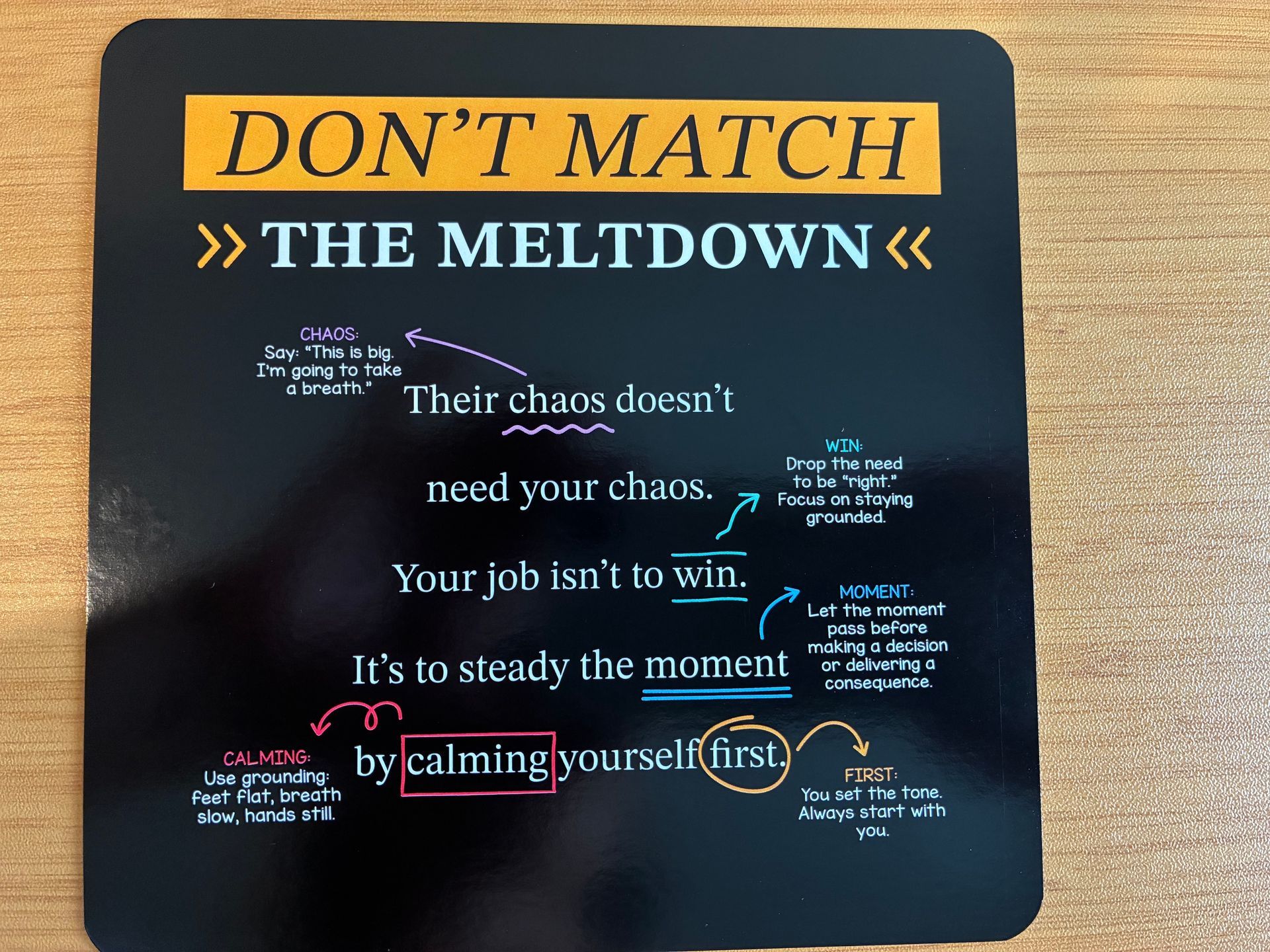
What this looks like in real homes 1) The “one more minute” spiral You say, “Time to turn the iPad off.” Your kid says, “NO!” and suddenly you’re negotiating, threatening, counting, or repeating yourself. Choose play not power looks like: You keep the boundary and shift the energy: “Okay, we’re going into Secret Agent Shutdown Mode. Your mission: press the off button with your pinky finger in 3…2…1.” Same limit. Less friction. 2) The getting-out-the-door standoff You say, “Shoes on.” Your kid wanders, melts, argues, or collapses like their legs stopped working. Choose play not power looks like: You become the “Shoe Announcer” for 20 seconds: “Ladies and gentlemen…we have a left shoe approaching the runway… will it land safely?!” Your tone does the heavy lifting, not your volume. 3) The bedtime power struggle You say, “Brush teeth.” Your kid says, “I already did!” (They did not.) Now you’re both locked in. Choose play not power looks like: You turn it into a tiny game: “Quick—show me your best ‘lion teeth’ and I’ll see if they’re ready for the Toothbrush Spa.” You’re not bribing. You’re connecting first so they can cooperate. Real talk: This won’t work every time. But it works often enough to change the whole tone of your home—because play is a fast track to felt safety, and felt safety is what makes cooperation possible. 3 playful ideas you can try today (even if you’re not naturally silly) 1) The 30-Second Challenge Pick one annoying daily task and turn it into a tiny timed mission: “Can you get your shoes on before this timer ends?” “Can you beat me to the sink?” “Can we do ‘toys away’ in one song?” Why it works: It shifts the brain from “I’m being controlled” to “I’m in a game.” Tip for non-silly parents: Keep it neutral and short—no big performance needed. 2) The “Two Choices + One Twist” Offer two acceptable options, then add a playful “twist” option that still meets the boundary: “Do you want to hop to the bathroom like a bunny or walk like a robot?” “Teeth first, then story… do you want ‘calm voice’ or ‘mystery narrator voice’?” “Shoes on the stairs or shoes by the door—you choose the location.” Why it works: It gives your child control inside your boundary. Tip: If they reject both choices, calmly repeat: “You can choose, or I’ll choose.” 3) Narrate Like a Sports Commentator Turn your voice into a calm, playful narrator for 10–20 seconds: “We have a child approaching the jacket… will they choose the sleeves?!” “The toothbrush is entering the mouth… folks, this is a big moment.” “Oh! The backpack has been spotted!” Why it works: It lowers threat and increases connection without you “giving in.” Tip for non-silly parents: You can do this in a low-key tone—think “documentary,” not clown. Choosing play over power doesn’t mean you’re becoming the “fun parent” 24/7 or letting go of expectations. It means you’re using connection as your shortcut to cooperation—especially in the moments that usually spiral. When you bring even a tiny dose of play, your child’s nervous system softens, the fight drops, and the boundary can actually land. Start small: pick one daily hot spot (shoes, screens, teeth, bedtime) and try one playful shift for 20–30 seconds. If it works, great—repeat it. If it doesn’t, you didn’t fail; you gathered information. The goal isn’t perfect parenting. The goal is a home where boundaries feel steadier, and relationships feel safer. Need a calmer way through power struggles? Let’s build your go-to play tools together. Visit the contact page and schedule a free consultation call. Connected Parenting Mindset Cards purchased from SELpower.com
More Posts